Rituals
What a Moroccan bath actually does for your skin
Beyond the steam and the black soap — the part that matters, and how often it is worth doing.
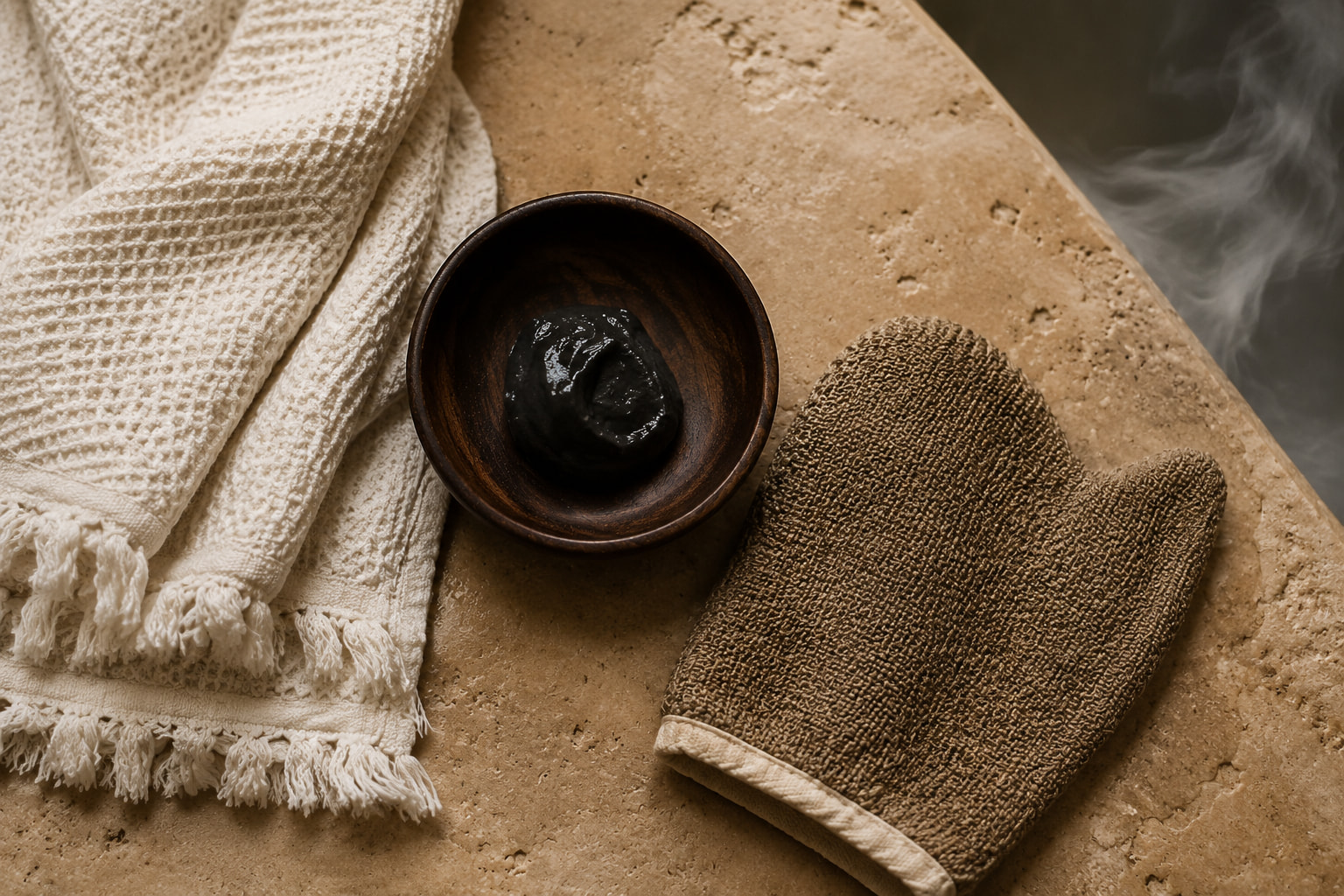
A Moroccan bath is not a scrub with better branding. The steps happen in a specific order for a reason, and skipping or rushing any of them changes the result.
Steam
Ten to fifteen minutes of steam softens the outermost layer of skin and opens the pores. Everything after this depends on it. This is the step people are most tempted to shorten and the one that should never be shortened.
Black soap
Savon beldi is made from olives and is alkaline, which loosens dead cells rather than scrubbing them away. It sits on the skin for several minutes and does its work while you rest.
The kessa
The kessa glove is where the visible part happens. Applied to skin that has been steamed and softened, it lifts away a layer that has taken weeks to build up. On skin that has not been properly prepared, the same glove is simply abrasive.
Ghassoul and oil
In the royal version, ghassoul clay draws out what is left and calms any redness. Argan oil closes the ritual and replaces the oils the process has stripped.
How often
Once every three to four weeks suits most skin. Weekly is too often — you would be taking away a barrier faster than it can rebuild.
Before and after
- Do not shave or wax in the 24 hours before.
- Eat something light beforehand; the heat on an empty stomach is unpleasant.
- Afterwards, drink water and moisturise generously.
- Stay out of direct sun for a day. Freshly exfoliated skin burns easily.
Both our Sharjah salons have dedicated hammam rooms. The classic ritual runs an hour; the royal version ninety minutes. Neither can be honestly done in less.